An interview with A.L. Kaplan
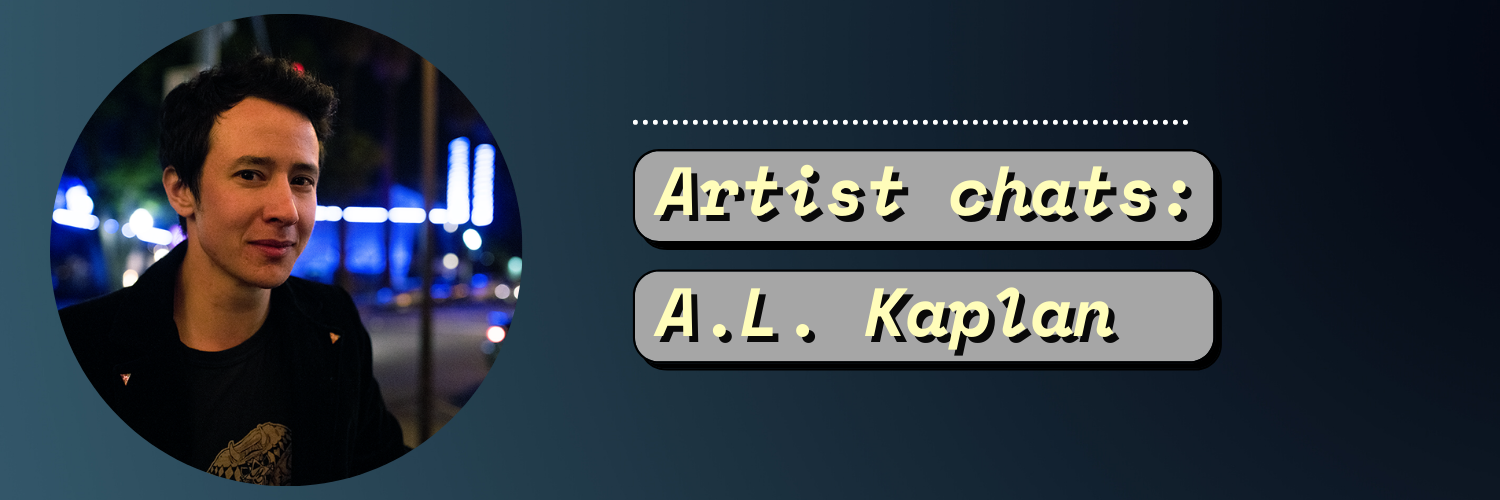
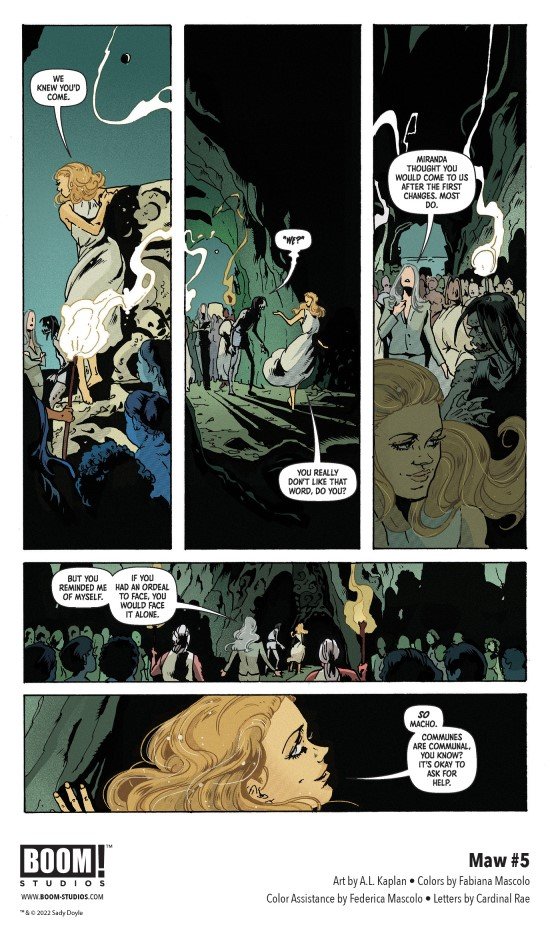
A.L. Kaplan came to my attention when I picked up the first two copies of a terribly horrifying and gut-wrenchingly brilliant series called MAW. Naturally, I had to pick his brain about his career, his artistry and his creative process and I'm happy to say it makes for an amazing read. Enjoy!
Check out some of their work here:
Thank you for having a chat with us. Can you tell us a bit about yourself and your artistic journey?- Did you have any inspirations in developing your art style?
Glad to be chatting! I’m a west coast American cartoonist and designer with a degree in psychology from UC Santa Cruz, interested in telling queer narratives in sci-fi/horror settings. I’m currently living with two cats and more plants than should grow in my northern Nevada desert home, and enjoy biking around the country and blasting doom metal when I’m not making comics.
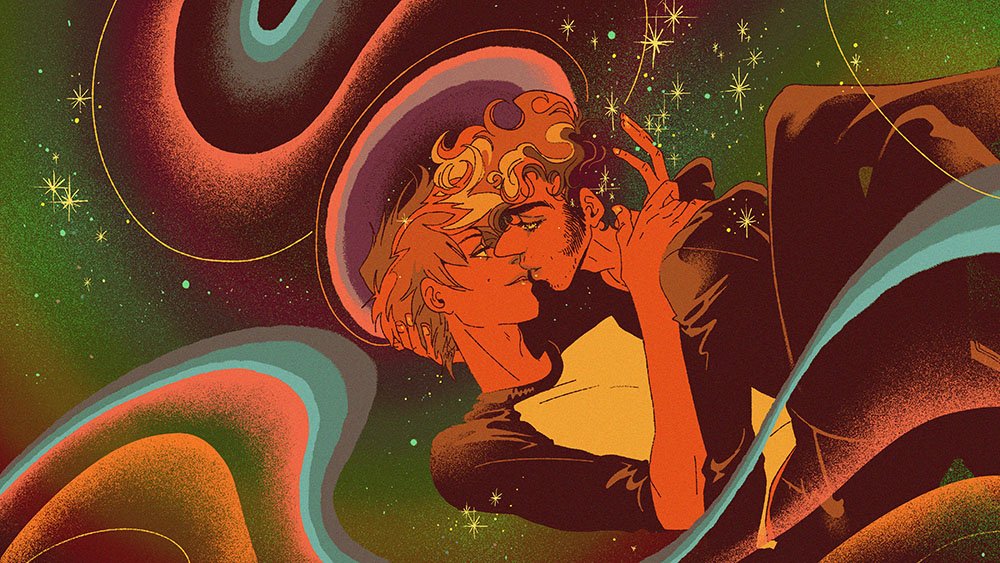
Drawing is a way of seeing the world, making sense out of it, and making it my own. I like conceptualizing style as a bubblegum ball amalgam of all the artists whose work I’ve enjoyed, constantly growing larger and more convoluted, haha. Most of all I’m attracted to bold shapes, beautiful lines, and macabre forms. I’ve read comics of all kinds since elementary school, and made webcomics off and on since the early-mid 2000s-- so cartoonists like Mokona, Brett Blevins, Paul Pope, and Mike Mignola (among many others) all shaped me at various stages. For visual storytelling, I often return to the directorial work of Kunihiko Ikuhara, Dario Argento, David Lynch, and Andrei Tarkovsky for guidance. Aside from making comics, I’ve worked in graphic design for a decade now, and that focus on engineering meaning through composition, as opposed to through rendering, has significantly shifted how I draw and tell stories.
Your art in Maw is so wonderfully in service to the narrative. How does story or plot inform your creative execution?
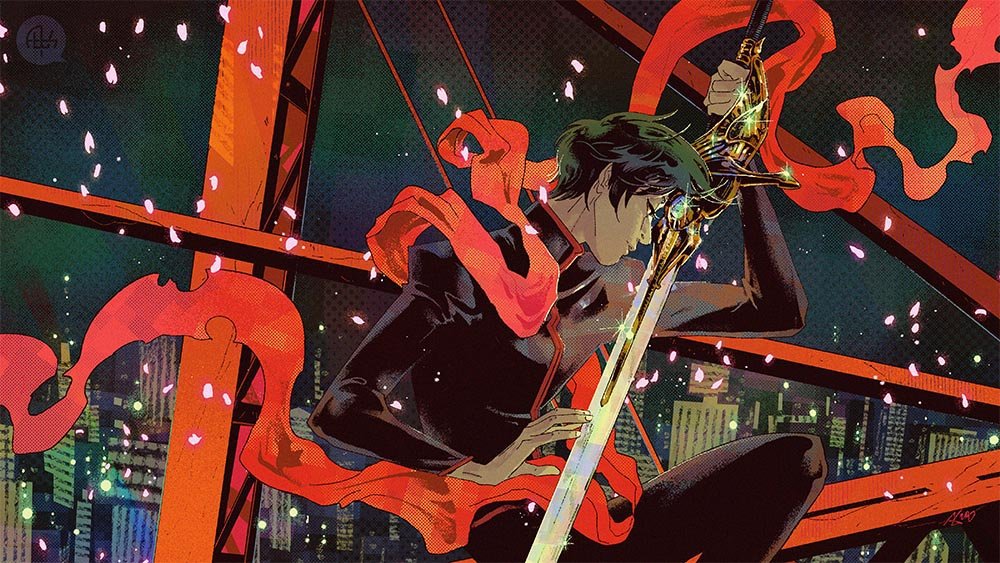
Well thank you, that’s very kind to say. Maw was my first time really telling someone else’s story, and I tried hard to respect that. We had some conversations upfront about approach and intention that aided my understanding of not only the script as it was written, but of the underlying emotions and ideas Jude wanted to get across. I’d keep both in mind in my layouts, trying to design visuals that did right by Jude’s vision: how the staging and framing of characters in a scene would cause them to be interpreted, how the arcs of movement and rhythm of the panels leads the eye across a page, what the shapes of the backgrounds and lighting could show or hide.
There is so much real pain in Maw, real pain that I can’t directly identify with. I couldn’t be as close in and as raw as another artist might have with the same script. That led me to take a more theatrical approach--especially for the violence.
Maw is very gross, but I wanted it also to be beautiful. Body horror is my favorite of horrors. It connects for me, even when the subject matter doesn’t. I wanted the veins and drips and goop and hair and spit to flow beautifully across the page to honor the characters’ pain and anger and suffering.
Can you run me through your process of taking a work from concept to completion?
Regardless if it is comics, illustration, or design, I start by really seeping myself in the brief, then amassing references and inspiration images for color, composition, style, location, etc. Larger projects require more of this work. Thumbnail or layout sketching is a great way to try out ideas and design meaning in using only basic shapes and forms. I think I spend the most analytical brain power at this phase in the process. If the foundation is strong, I have the confidence to let each subsequent step be looser and more improvisational.
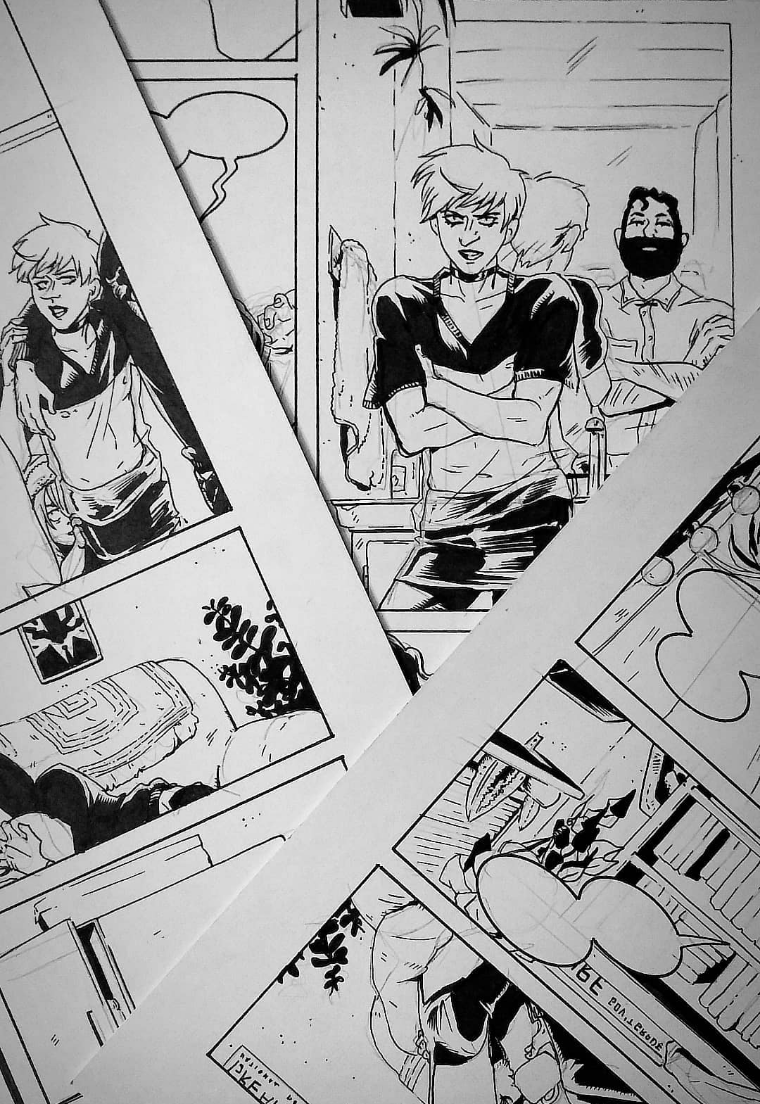
Once I’ve gotten a satisfying layout and gesture sketch, I’ll do a rough pencil sketch at-scale to find my forms and shadows and whatever other foundation I would rather use inks to imply than describe. If I’m using color, I’ll do a rough color pass to make sure everything’s working how I’d like it to. Then I go in with inks, sometimes using a lightbox, sometimes over pencils, sometimes digitally. I’m far more precious with digital art, so most of my comics are traditional media for the sake of expediency and my own sanity. Somewhere around this stage I’ll probably get angry and go shove my face in a cat or something… but then it’s onto scanning and digital cleanup (if traditional inks), or coloring. I prefer black and white comics and I’m still finding my comfort with color in general, so the more colors are involved the more I invite you to imagine the inclusion of cat pestering into my process.
Do you have any tips and tricks you use in your creative process?
Especially with a medium like comics, a lot of my process is designed around keeping myself interested and engaged. If my pencils are super tight, then inking is too mechanical and disengaging. But if I don’t have a good foundation, then there’s too much pressure on the inks to find the forms and I also get disengaged. I’ve also found that I need to remove my reference and inspiration images after the first gesture/thumbnail sketches. If I don’t remove them, I’ll feel too beholden to them. In a great thread on painting recently, Devin Korwin said “try painting from reference, but thinking as if you were working from imagination.” I love that idea and reminder to be the one in control of the design of your art.
How would you suggest artists get noticed by publishers or studios?
Getting noticed and getting hired may not be the same thing; and not being on the other side of the desk, I can’t even say with certainty how any of what I’ve done has helped with either. But my most general advice is to make the work you want to make, and put it where you think the people you want to see it will find it. If no one sees it, you’ll still be making the work you want to make. And when they finally do see it, you’ll have a body of work that shows you can do the job. There are formal channels for this (portfolio reviews, submissions, etc.) and informal (social media, etc.); unfortunately not all roads in are equally accessible, but regardless, the right roads in will depend ultimately on each particular artist’s career goals and circumstances.
When you feel overwhelmed, discouraged, or burnt out, what do you do to push through and get things done?
Get up and take a walk! Even just a quick break to put on a new album or do dishes can be helpful in creating a fresh perspective on the problem. Worst case scenario, the problem still stands but my dishes are done. But I love walking, or biking, the best: I get those endorphins and steep myself in an environment in which the problems I’m solving are different and require different answers. My body is as much an intellectual organ system as my brain.
The fan art section on your website is brimming with some really good stuff. What do you think is an ideal balance between fan art, homages and original creations?
Similar to getting your work noticed, what type of work you make really depends on where your interests lie, what your career goals are, and therefore what your intentions behind showing the artwork is. Portfolios should be tailored to show prospective clients the work you want to do -- they’ll be hiring you based on what you’re showing, so don’t show work you don’t want to get. And if you’re sharing work online as a hobby, then of course the balance is entirely up to your pleasure. Don’t let anyone tell you what to do.
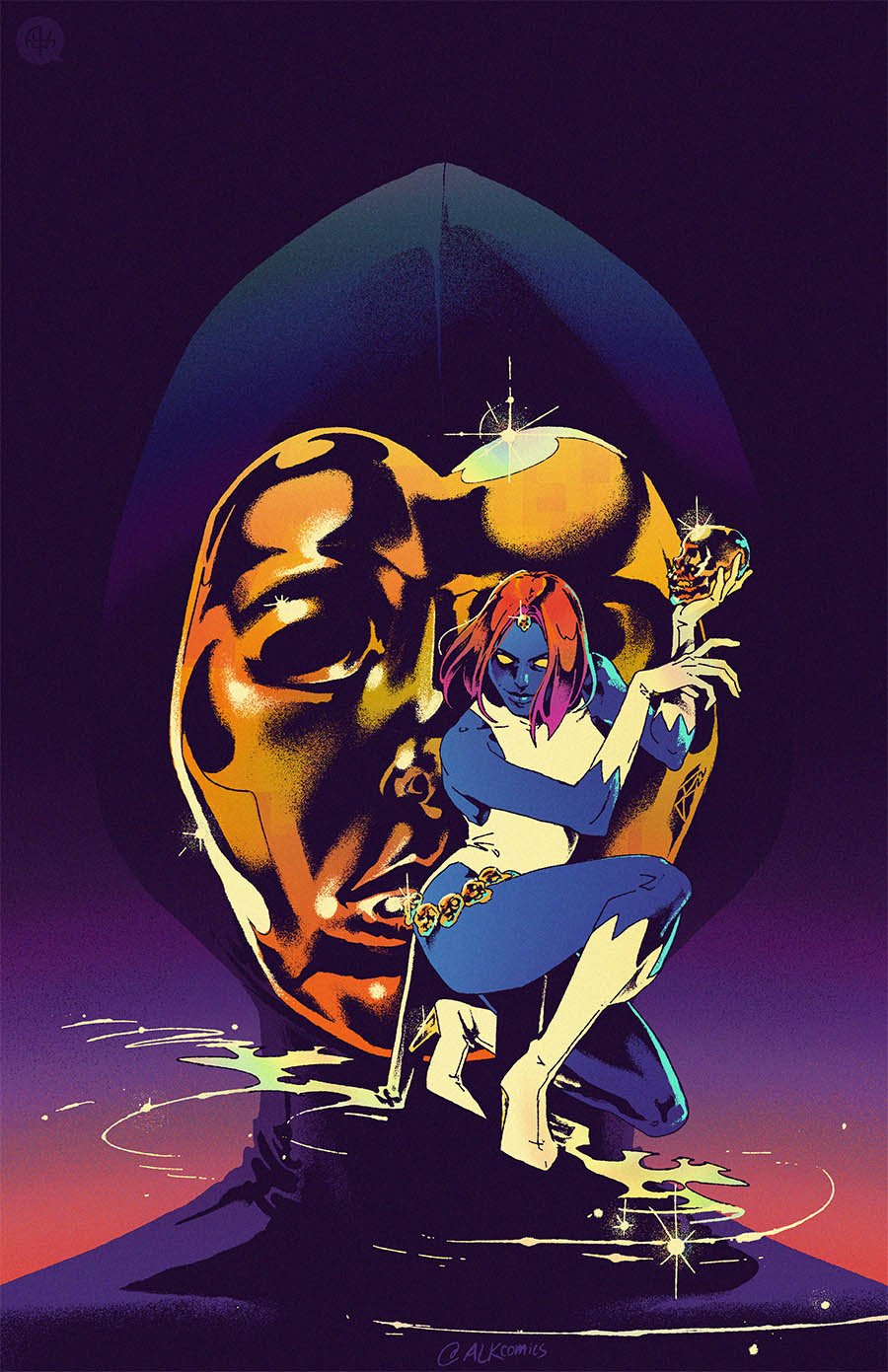
Creating work in a familiar idiom to the industry you want a job in can be helpful: an editor for comics might get a clearer picture of my abilities from a drawing of Storm, or Sailor Moon, than from a drawing of my own characters. They have context for the established characters more so than my own. But ultimately I do fanart because I want to; and if it gets me jobs on covers for titles I like, that’s an added bonus. It’s a fun way for me to engage with media I enjoy and share that engagement with others. Additionally, established characters often carry with them an excuse to draw a pose or use lighting or effects that my own characters don’t. When I’m focused more on my own comics, though, it’s often the other way around!
Are there any skills you’re trying to learn at the moment? What is your process of learning new techniques?
I hope I’m always trying to learn something new. Right now, I’m fumbling through a long process of figuring out how to design images with better and more intentional shape language. It’s a mixture of learning to see underlying abstraction, but also better understanding realistic forms. Abstraction isn’t separate from reality; it’s a way of seeing reality. So for me, this is a slow process of getting better at this task from both sides.
Going back to what inspires me also helps, whether that’s flipping through books, curated image archives, or looking back through my Liked posts on social media. Not merely seeping myself in the inspiration: but really being curious about what I like about it, and analyzing how the artist designed that piece successfully. Try to explain to someone else how what the artist did make the piece successful for you. It’s not about the artist’s intentions; it’s about learning what you like in their work and how you can learn from it. Explaining the same about work you don’t connect with can be equally important, and help shed light on new ideas and ways of seeing, as well as teach you what not to do. I’m grateful that in my day job I get to learn a lot through talking with people about why they like the work they like.
What cool things are you working on right now, and where can we follow your journey?
Nothing I can announce yet, unfortunately. But I’m working on some graphic novel and comic pitches and looking forward to returning to conventions if the world cooperates! You can find me on Twitter, Tumblr, & Instagram @alkcomics, my portfolio at alkcomics.com, and in person this August in NYC tabling at Flame Con (again, pandemic willing).